

If your jaw clicks when you chew, aches after a long day, or feels stiff first thing in the morning, you may be dealing with a temporomandibular joint (TMJ) disorder. At Dr. Hari’s Dental Centre, we provide temporomandibular joint (TMJ) therapy in Chennai for both children and adults, using a diagnosis-first approach rather than a one-size-fits-all splint. As a trusted TMJ specialist in Chennai, our team focuses on identifying the root cause before recommending treatment.
The TMJ connects your jawbone to your skull and works every time you chew, speak, swallow, or yawn. When it becomes inflamed or misaligned, the effects rarely stay contained to the jaw — patients often report headaches, ear discomfort, and neck tension alongside the more obvious clicking or locking. Left untreated, TMJ dysfunction can worsen over time and affect bite alignment permanently. The most common causes we see in clinic are bruxism (nighttime teeth grinding), old dental misalignments, jaw trauma, and chronic stress. If you’re searching for reliable TMJ disorder treatment in Chennai, understanding these underlying causes is the first step toward lasting relief.
Understanding TMJ Disorders: Why Diagnosis Comes First
Every TMJ case is different, which is why we start with a full diagnostic workup rather than jumping straight to treatment. This diagnostic-first philosophy is central to how we approach temporomandibular joint (TMJ) therapy in Chennai.
- 3D imaging and digital X-rays to visualize the joint structure and rule out degenerative changes.
- Bite analysis to identify how your upper and lower teeth are (or aren’t) meeting.
- A clinical history review covering grinding habits, stress levels, sleep quality, and any past jaw trauma.
This diagnostic step matters because two patients with the same symptom — say, jaw clicking — can have completely different underlying causes, and treating the wrong one rarely helps.
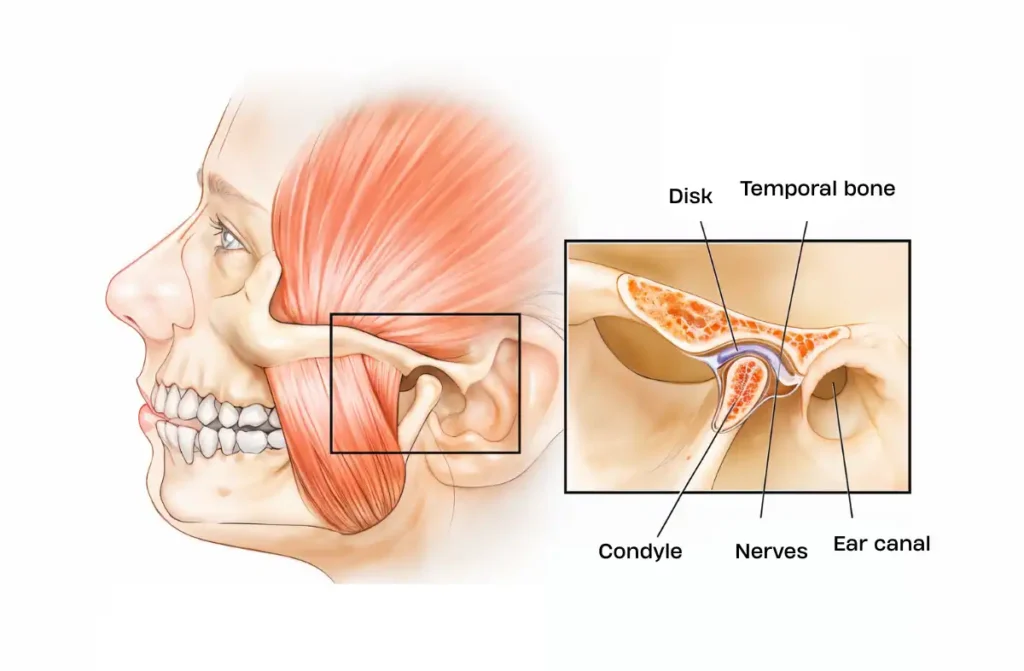
Treatment Options for Jaw Pain and TMJ Dysfunction
Once a diagnosis is confirmed, we build a treatment plan around it rather than defaulting to the same protocol for every patient. Below are the core options we use as part of TMJ therapy in Chennai.
Oral Appliances and Splint Therapy
Custom-fitted night guards and TMJ splints remain the most reliable first-line treatment we offer. They reduce the force of grinding, ease pressure on the joint overnight, and give inflamed tissue a chance to recover. Unlike over-the-counter guards, ours are molded to your bite, which makes a measurable difference in comfort and effectiveness.
Physical Therapy and Jaw Exercises
Guided stretching, massage techniques, and ultrasound therapy help restore flexibility and reduce muscle tension around the joint. For children, we keep sessions short and engaging; for adults, we build structured programs that can be continued at home between visits.
Medication for Acute Flare-Ups
Anti-inflammatory medication, muscle relaxants, and pain relief are used to manage acute pain episodes — never as a long-term substitute for addressing the root cause. Pediatric dosing is calculated individually and monitored closely.
Bite Correction
When misalignment is driving the dysfunction, orthodontic treatment or restorative dental work can correct the bite itself, which removes the underlying source of joint strain rather than just managing the symptom.
Minimally Invasive Procedures
For persistent or complex cases that don’t respond to conservative care, arthrocentesis (a joint-flushing procedure) can relieve inflammation and restore mobility without surgery.
Lifestyle and Behavioral Support
Clenching habits, poor sleep, and chronic stress are frequent contributors to TMJ flare-ups. We work with patients on posture correction, stress-reduction techniques, and — where needed — referrals for sleep-related concerns.

What to Expect at Your First TMJ Consultation
If you’ve never had a jaw joint evaluated before, here’s what a first visit typically involves:
- Symptom review — when the pain started, what triggers it, and whether you notice clicking, locking, or grinding.
- Physical examination of jaw movement, muscle tenderness, and bite alignment.
- Imaging, where needed, to rule out structural joint damage.
- A treatment plan discussion, including realistic timelines — most patients see initial symptom improvement within 2–6 weeks of starting splint therapy, though full resolution varies by cause.
We keep this first visit unhurried, since an accurate read of your symptoms upfront saves time (and discomfort) later.
Cost of TMJ Treatment in Chennai
TMJ treatment cost varies depending on what’s actually driving the dysfunction. A custom night splint is generally the most affordable starting point, while cases needing orthodontic bite correction or minimally invasive procedures cost more, reflecting the additional diagnostic and procedural work involved. We discuss cost transparently during your consultation, before any treatment begins, and can guide you on what’s typically covered under dental insurance. If you’re comparing TMJ treatment in Chennai, we’d recommend prioritizing an accurate diagnosis over the cheapest splint — treating the wrong cause tends to cost more in the long run.
Preventing TMJ Problems Before They Start
Prevention matters as much as treatment, particularly for children who are still developing.
- Routine dental screenings catch early misalignment before it becomes symptomatic, which is especially important during a child’s growth years.
- Custom sports mouthguards protect the jaw joint during contact sports — a common but preventable cause of TMJ injury in young athletes.
- Posture awareness, especially around phone and laptop use, reduces the neck and jaw tension that quietly feeds into TMJ strain over time.
Why Choose Dr. Hari’s Dental Centre for TMJ Therapy in Chennai
Our team combines dentists, orthodontists, and physiotherapy support to manage TMJ cases from diagnosis through long-term maintenance, with treatment protocols adjusted by age — gentle and non-invasive for children, more comprehensive where adults need it. Every treatment plan includes scheduled follow-ups so we can track progress and adjust course rather than leaving patients on a fixed protocol regardless of how they respond. Patients across Medavakkam and the wider Chennai area choose us for TMJ treatment in Medavakkam because of this combination of diagnostic depth and age-specific care.
Conclusion
TMJ disorders rarely resolve on their own, and ignoring persistent jaw pain can lead to chewing difficulty, speech changes, and chronic facial discomfort. With an accurate diagnosis, the right combination of splint therapy, physical therapy, and — where needed — bite correction, most patients see meaningful, lasting relief. If jaw pain, clicking, or stiffness has been part of your routine for more than a few weeks, temporomandibular joint (TMJ) therapy in Chennai at Dr. Hari’s Dental Centre is worth exploring — the earlier it’s evaluated, the simpler treatment tends to be.
Related reading: Trauma and Emergency Care · Preventive Dentistry · Sleep Dentistry · Pediatric Dentistry · Orthodontics and Aligners


